
We Refuse to Grow Numb

Christians and politics. Part Two.
Last week I wrote about political captivity, the subtle way partisan allegiance can begin to function like a form of worship, slowly displacing the lordship of Jesus and replacing the Scriptures with tribal talking points as the lens through which Christians interpret the world. The result is often fracture within the body of Christ.
I stand by every word of that.
That essay was intentionally pastoral, aimed at resisting the temptation to make politics bigger than it is. As a pastor, my primary role is to remind people about Jesus of Nazareth. He is currently reigning on the throne at the center of the universe. His reign will have no end. Our bodies will rise from the ground in His fully realized kingdom. This puts the latest news cycle into perspective. Children of God never have to let fear and outrage form us more than the Holy Spirit. We certainly don’t need to confuse electoral wins with kingdom advance. So as God’s household on earth, the Church must remain family even when we disagree on temporal issues. That’s what Part One was about: resisting political captivity.
But there is a different danger than political captivity that we Christians face in politically heated moments like these:
Moral numbness.
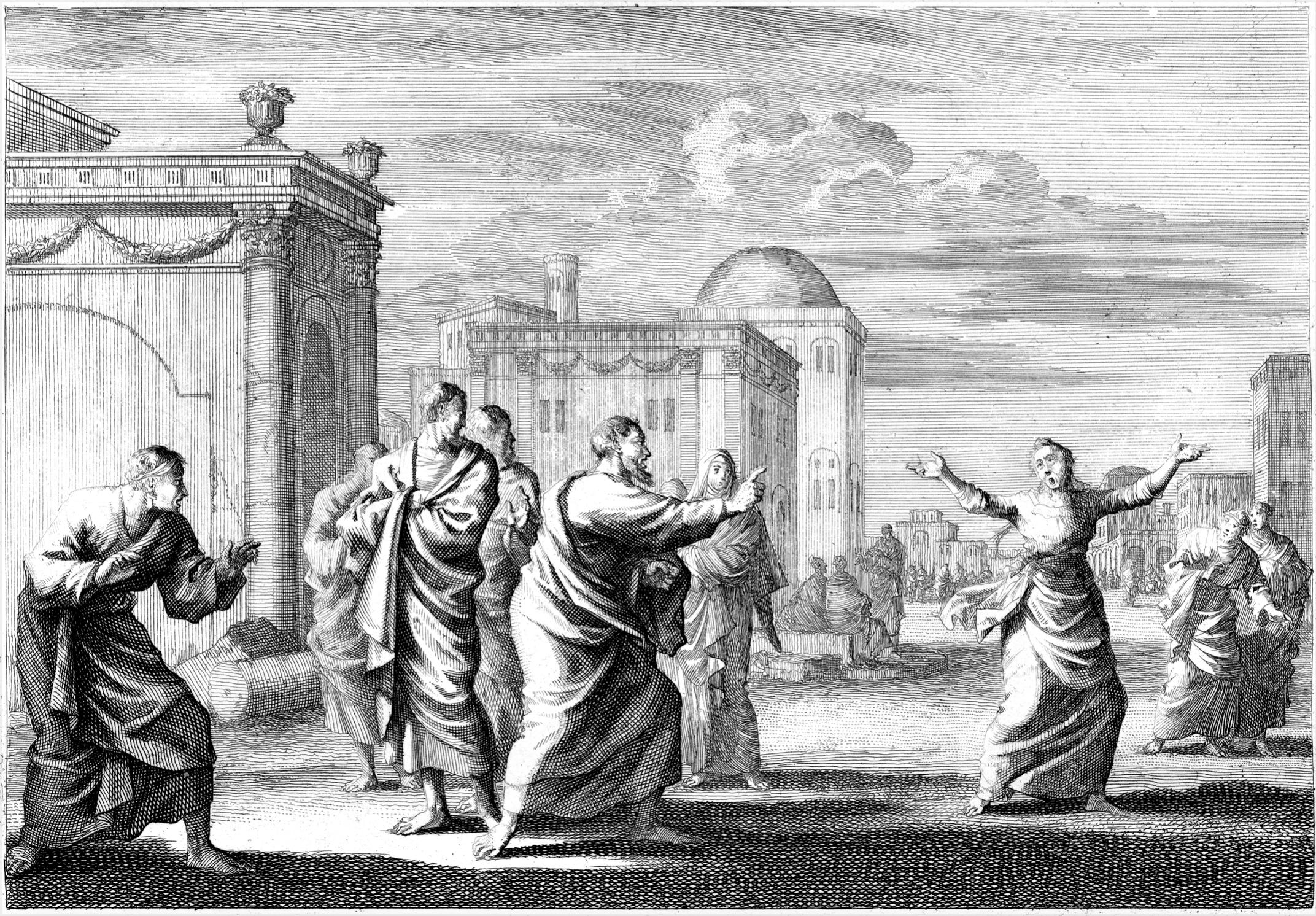
We are prone to fall prey to this numbness precisely while telling ourselves we are being “balanced” or “non-partisan”… or a common phrase I like to use, “politically homeless.”
So drawing upon as much humility as I can, I want to name this:
Refusing political worship doesn’t mean refusing moral clarity.
Avoiding partisan captivity doesn’t mean suspending discernment.
And staying unified as the Church doesn’t require us to pretend that everything unfolding around us is normal.
It is not normal.
Over the past weeks, I’ve sat with people in our church who are struggling deeply. Parents. Immigrants. People of color. Neighbors who carry low-grade fear in their bodies as they go about ordinary life. For them, what’s happening in our country isn’t digital debate fodder or ideological. It’s embodied. Daily and personal.
At the same time, in many of the communities I also find myself in (communities largely insulated from the immediate consequences of political upheaval), I’m witnessing what feels like a slow descent into a kind of moral vertigo, and I feel the weight of complicity that comes when troubling realities are normalized simply because they are repeated.
Scripture names this vertigo with disruptive clarity:
“Woe to those who call evil good and good evil,
who put darkness for light and light for darkness.” (Isaiah 5:20)
This tendency is not new to 2026. One of the great spiritual threats in any age is moral numbness, the gradual dulling of conscience that arrives not through sudden catastrophe, but through repetition. What once would have shocked us begins to feel ordinary. What should alarm us we now shrug at, unsurprised.
The Bible invites God’s people to live differently.
The prophets didn’t speak because they loved dropping hot takes.
They spoke because the injustice that breaks the heart of their loving Creator was becoming the new normal in their city.
Jesus Himself wept over a city that could not longer recognize the things that made for peace (Luke 19:41–44). His tears had nothing to do with partisanship. They were prophetic and pastoral tears, shed in union with His Father and the Holy Spirit.
Many in our community are asking faithful, urgent questions:
What does it mean to love our neighbors when state power feels increasingly unrestrained?
How do we seek peace without making peace with injustice?
How do we joyfully resist fear without retreating into passivity?
Scripture offers illumination here. We worship a God who consistently identifies Himself not with the powerful, but with the vulnerable:
“I was a foreigner and you welcomed me.” (Matthew 25:35)
“Do not oppress the foreigner; you yourselves know the heart of the foreigner.” (Exodus 23:9)
“Learn to do right; seek justice. Defend the oppressed.” (Isaiah 1:17)
The early church didn’t confuse spiritual maturity with silence in the face of suffering. The gospel they preached created resistance: resistance to sickness-driven poverty (Acts 3:7), resistance to money-shaped deception in their own community (Acts 5:4), resistance to governing authorities when faithfulness required civil disobedience (Acts 5:29), resistance to economic systems that profited from human bondage even at the cost of jail (Acts 16:16–24), and resistance to every empire that dared claim ultimate authority over people and creation, a claim Scripture reserves for Christ alone (entire theological argument of Revelation).
History reminds us painfully that atrocities are rarely carried out only by the villains. They are enabled by ordinary people who told themselves it wasn’t their place to ask questions or intervene.
We remember figures like Corrie ten Boom not because they had hot takes or wrote a pithy Substack essay, but because they refused to grow numb. Thousands of Christians like ten Boom, from various denominations including both Catholics and Protestants, risked their lives to hide Jews during the holocaust. They would not allow their faith to be reduced to non-participation while their neighbors were being taken away.
So let me say simply:
What we are witnessing is not normal.
And refusing to normalize it is not extremism.
It is Christian maturity.
This does not contradict last week’s invitation to resist political captivity.
This completes the picture.
Christians are called neither to panic nor to sleep.
In a passage about our Christian responsibility to society, governing authorities, church, enemy, and neighbor, Paul calls out:
“The hour has already come for you to wake up from your slumber.” (Romans 13:11)
I believe my calling as a pastor and worship leader in this season is to non-anxiously and joyfully remind people (and myself) how live more fully human. To help us direct our eyes toward the Lamb who was slain by the empire on account of treason, and more importantly, for our sins. To help us resist both the gravity of apathy on one hand and the pull of political captivity on the other, and instead to find fulness of life through living allegiant to Christ alone.
Jesus is forever Lord of all.
No empire, no constitutional republic, no ideology gets the final word.
May we be a people who love courageously, tell the truth gently, and refuse to grow numb.
Really appreciate the nuance here between avoiding political captivity and still refusing moral numbness. The point about atrocities being enabled by ordinary people who told themselves it wasnt their place to intervene is something Ive thought about alot lately. Its easy to mistake silence for neutrality when really its just complicity in slow motion.
I’ve been so encouraged by your essays. Thank you so much for taking the time to write these out. I stumbled across the one about the wheat and tares first, and felt so convicted and uplifted by it.