
Should I Be Baptized? Rebaptized? What About My Kids?
Babies or Believers? Yes. The Church Can Practice Both and Stay United

**this is Question #6 of this Top 10 Questions series. (subscriber supported)**
There are questions that show up at our Basics class, and then there are THE questions… the ones that don’t just touch on cultural trends of concerns of the moment but reach deep into the core practices of Christianity itself.
Questions about the things Jesus commanded. The things the Church has been wrestling with for two thousand years. Questions woven into the fabric of what it means to be a disciple of Jesus.
Baptism questions are always among THE questions.
“Is baptism required for salvation?”
“Can someone baptized as a baby be baptized again?”
“Should we baptize people who were baptized before?”
“Should we baptize babies, or just cognizant ‘believers’?”
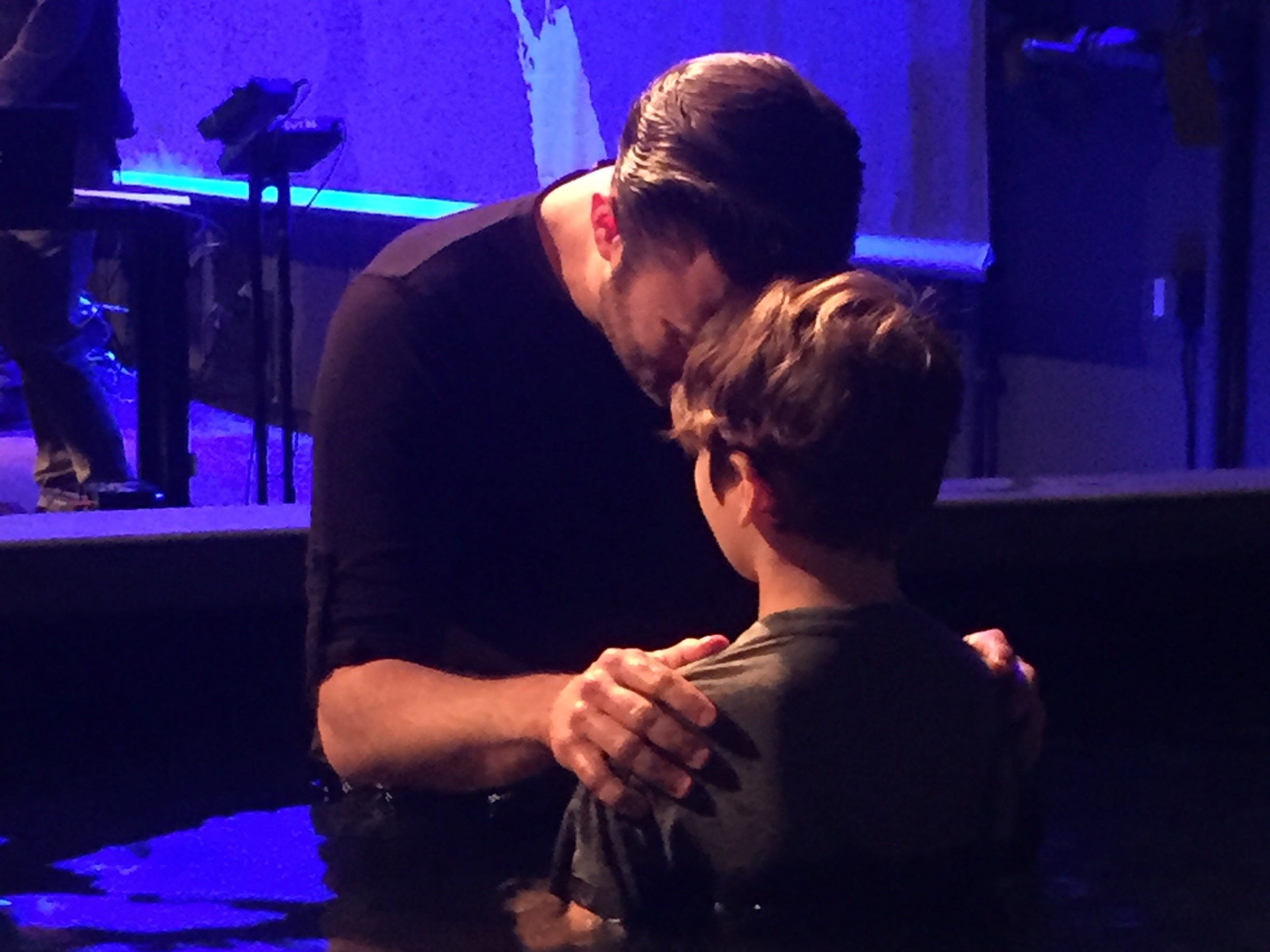
I’ve seen hundreds of faces behind these questions:
The woman who was baptized as an infant in a Catholic church, came to faith as an adult, and genuinely doesn’t know if her infant baptism “counts.”
The couple, one raised Baptist, the other Presbyterian, trying to figure out what to do about their newborn daughter without starting a family feud.
The guy who was dunked in a youth camp pool at age 11, said the right words, but isn’t sure he really believed. Does he need to do it again?
The new believer who grew up completely unchurched and is asking the most basic question: “Do I need to be baptized to be saved?”
These are people trying to faithfully obey to Jesus with their bodies. And their questions are often wrapped in insecurities and anxieties… wondering if something they did (or didn’t do) as a child somehow disqualifies them now.
I’m hoping to make some waves with this one. Water we waiting for?
Ok ok, overly-aggressive dad jokes out of the way, let’s immerse ourselves in this topic. Diving in… 3, 2, …
Is Baptism Required for Salvation?
Short answer: No.
Salvation is by grace alone, through faith alone, in Christ alone. Period.
The thief on the cross wasn’t baptized. But we know he would join Jesus in paradise that day because Jesus said so.
Longer answer: Yes, but…
Yes, God has bound salvation to the sacrament of baptism, but God Himself is not bound by His sacraments.
Here’s what the New Testament shows us:
When people came to faith in the book of Acts, they were baptized. Immediately.
The Philippian jailer, the Ethiopian eunuch, the 3,000 at Pentecost. Faith and baptism happened together, often within hours.
Jesus commands it: “Go and make disciples of all nations, baptizing them…” (Matthew 28:19). He’s even more direct in Mark 16:16: “Whoever believes and is baptized will be saved.”
Peter connects baptism directly to salvation: “Baptism now saves you—not the removal of dirt from the body but the pledge of a clear conscience toward God. It saves you by the resurrection of Jesus Christ” (1 Peter 3:21).
I’m not sure how much more explicit Peter could have been.
And the early church practiced it universally. There’s no category in the New Testament for “unbaptized believer” as an ongoing state.
The tension both Protestants and Catholics wrestle with:
Baptism is clearly commanded. It’s the ordinary way God brings people into His covenant family. Peter says “it saves you.”
As the Catechism of the Catholic Church puts it: “God has bound salvation to the sacrament of baptism, but He Himself is not bound by His sacraments” (CCC 1257).
In other words: Baptism is the normal path. But God can save people who, through no fault of their own, never had access to baptism.
The thief on the cross. The person who comes to faith on their deathbed. The person in war-torn Iran who’s never had access to a church but seeks Jesus with with a sincere heart.
God isn’t limited by our categories or circumstances.
But that doesn’t make baptism optional.
If you know Jesus commands it, if you have access to it, if you’re able to be baptized, then you should be.
Not because the water saves you. But because obedience matters to God. “If you love me, keep my commandments,” Jesus says. And His first command in His great commission is to be baptized.
Think of it like a wedding ceremony. You’re married when you speak the vows. The ceremony marks the moment publicly with witnesses.
Baptism is like that. It’s the ceremony that marks your entrance into God’s covenant family.
If you’re a follower of Jesus and you haven’t been baptized, then Jesus is commanding you to be.
The Great Baptism Debate: Who Gets Baptized?
For 500 years, Christians have been divided over one question: Should we baptize babies?
The Credobaptist (Believer’s Baptism) Case:
Only believing adults are baptized in the New Testament
Baptism is “an outward sign of an inward reality,” so the baptizee should know what they’re doing
You raise children to become Christians, not as Christians, because a Christian is, by definition, a believer
The Paedobaptist (Infant Baptism) Case:
Whole “households” were baptized in the New Testament, which would have included children
Since the Old Covenant included children (circumcision), then the New Covenant, which is greater, certainly includes them
You raise children as Christians, bringing them into the covenant community from birth
Scripture doesn’t settle this definitively.
Ironically, faithful biblical scholars on both sides agree on this point.
Both sides have biblical arguments. Both have been practiced by faithful Christians for centuries.
And this is crucial: the early church had a wide variety of baptismal practices and didn’t divide over it.
According to church historians, in the second and third centuries, Christians baptized at all different ages. Some baptized infants. Some waited until children could speak for themselves. Some waited until adulthood.
And they all considered each other part of the “one baptism” mentioned in the Nicene Creed.
What changed? Augustine.
In the early the fifth century, he connected infant baptism to original sin in his debates with Pelagius. Within a hundred years, what had been an optional practice became mandatory church doctrine.1
It wasn’t until the sixteenth century (the Anabaptists) that some started saying “no infants should be baptized.”2
For the first 400 years of church history, there was variety, and unity.
But what about today?
Should someone ever be rebaptized?
And what about babies? Should they be baptized, or just believers?
